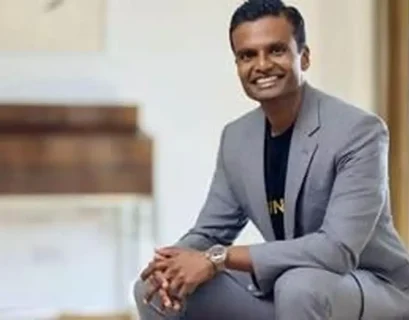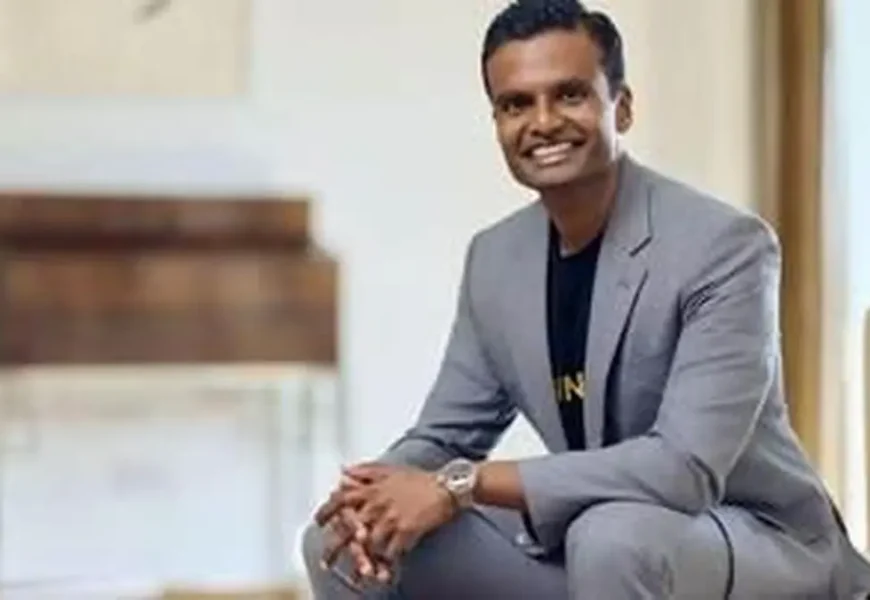
SB Seker, APAC Head of Binance
| Photo Credit:
Vallari Sanzgiri _12272
Security against cyberattacks such as the one suffered by Binance over the last week is an ecosystem responsibility, said SB Seker, APAC Head of the exchange platform at the Indian Blockchain Week event.
Having weathered an attack impacting over $6.3 billion assets, the head of the largest global exchange stressed the contribution of the entire ecosystem in addressing the issue.
“Through the collaboration with ecosystem partners, be it other exchanges, blockchain analytics companies or law enforcement around the world, more than half of the assets have been recovered. In our view, security is an ecosystem responsibility and no one actor can single-handedly cover end-to-end on the spectrum. This is not a simple detect vector. It is a complicated and complex detect vector,” said Seker, adding that the technical security audit detailing the nature of the incident will be published in due course.
Seker also talked about Binance’s commitment to “effectively backstopping this hacking incident” with company assets, whether done by a combination of CFO fund, futures insurance or all corporate funds. The platform as of October 31, replenished 90 per cent of impacted assets while the remaining 10 per cent are illiquid assets, sourced from the open market, metacoins (MTCs) and other exchanges.
“We’ve straight up said that we will make sure that no user assets are impacted, and that any loss that we need to make good on will be basically bought by the company,” he added.
On November 1, the exchange shared an FBI report that attributed the hack to the Democratic People’s Republic of Korea (North Korea). The FBI refers to this specific North Korean malicious cyber activity as “TraderTraitor” wherein actors converted stolen assets primarily into Ethereum (ETH). These assets are then further laundered by converting them using DeFi and instant swap services as they prepare them for further laundering stages.
When asked about India, Sekar asserted the region as one of the two most critical markets in all of APAC with the other being Korea.
“We want to be in a position where when India moves to a full licensing model, we want to be in the right position to be one of those licenses that leads to the market. We have never stepped back from India. We’ve only moved forward,” said Seker.
With regards to stablecoins, he said stablecoins have scaled and become a feature of global payment settlements, not just for retail, but also at the corporate treasury level. However, given the complexities around the dollar stablecoins, he observed India will have to decide its own alternative.
“A digital rupee stablecoin makes sense but then the discussion for regulators is should that be a CBDC style instrument, what I call the walled garden? Or is it effectively an rupee stablecoin that’s a public instrument or a privately issued rupee stablecoin instrument? Those are the things India has to decide,” he said.
Published on November 1, 2026