The controversy surrounding Russia’s absence from international ice hockey has taken another unexpected turn. Just two days after the International Ice Hockey Federation (IIHF) confirmed that Russia would miss the upcoming World Junior Championship, the governing body’s website became the target of an apparent cyberattack, leaving its online platforms inaccessible.
Watch What’s Trending Now!
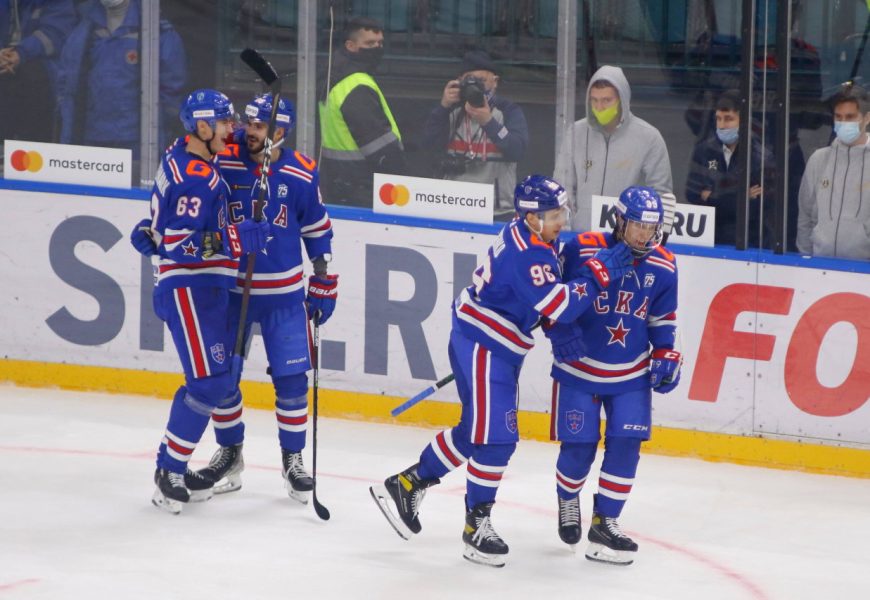
The incident unfolded Tuesday morning, when visitors reportedly found an image of Russian hockey players celebrating alongside a provocative message aimed directly at the federation. “Scared to face Russia? You banned the only team you can’t beat,” read the caption, according to reports by the Canadian Press. The image was subsequently removed, and the website displayed a notice saying it was temporarily unavailable for maintenance.
The IIHF later confirmed that it had suffered a cyberattack and condemned the incident through a statement on social media. “The International Ice Hockey Federation has been the target of a cyberattack. We strongly condemn these actions and are taking all necessary steps to investigate the source of the attack and restore our systems,” the governing body stated.
It further assured fans and stakeholders that its platforms would return once officials were confident about their security. “The IIHF remains committed to protecting the integrity of our organization and safeguarding our sport.”
Although the identity of those responsible remains unknown, the timing has raised questions about a possible connection with the growing dispute over Russia’s exclusion. The incident came shortly after the IIHF announced that Canada’s restrictions would prevent the Russian U20 team from entering the country for the tournament.
The Russian Federation condemns cyberattack on IIHF
Interestingly, the Russian Ice Hockey Federation (RIHF), which has been vocal in opposing the IIHF’s decision, also condemned the apparent hacking incident. Despite its disagreement with the governing body’s handling of Russia’s participation, the federation made it clear that cyberattacks were not an acceptable way to express a sporting or political position.
“The RIHF views such actions negatively and considers the use of abusive methods to express a sporting or public stance to be unacceptable,” the Russian federation said.
It also stressed that interfering with another organization’s information systems fell outside the legal framework. The RIHF maintained that its fight to restore Russian players’ international rights would continue through established sporting and legal channels.
“The protection of the interests of Russian hockey players and the restoration of their right to participate in international tournaments must be pursued exclusively through lawful means, in accordance with international sporting regulations and established legal procedures,” it added.
The federation’s response comes amid an increasingly complicated dispute between Russia and the IIHF. Russian and Belarusian teams have remained suspended from international competitions since Russia’s invasion of Ukraine in 2022. However, the situation changed on October 30, when the Court of Arbitration for Sport (CAS) ruled that the IIHF must allow Russian teams to return to its competitions.
That decision appeared to reopen the door for Russia’s participation in the World Juniors. However, Canada quickly reaffirmed its opposition, with Prime Minister Mark Carney making it clear that Russian and Belarusian athletes would not be allowed to represent their countries at sporting events on Canadian soil while the war continued.
The IIHF eventually confirmed on November 15 that Russia’s U20 team would not participate, citing the restrictions formally communicated by the Canadian government. The tournament will continue as planned in Edmonton and Red Deer from December 26, 2026, to January 5, 2027.
The decision also brought Norway back into the competition after the country had previously faced relegation to accommodate Russia. Meanwhile, several European federations, including Finland, Sweden, and Switzerland, had expressed opposition to facing a Russian team.
Russia’s exclusion has also created uncertainty around future tournaments, particularly the 2027 Men’s World Championship in Germany. With the Russian federation threatening further legal action and the IIHF still expected to implement the CAS ruling, the governing body faces difficult decisions ahead.
For now, the cyberattack has added another unexpected dimension to an already heated international hockey dispute. While the IIHF works to restore its website and investigate the incident, the larger disagreement over Russia’s return remains unresolved. And with the next World Juniors approaching, the pressure on hockey’s governing body is unlikely to ease anytime soon.