What began as a legal dispute in Slovakia has since evolved into a diplomatic row over language and historical memory, with the term “Felvidek” now at its centre. The controversy started in late November, when Progressive Slovakia, the main opposition party, urged the Slovak government to stop ongoing land confiscations based on the post-war Benes Decrees. The ruling coalition responded by adding a last-minute provision to a Criminal Code amendment that criminalises the denial or questioning of the decrees. President Peter Pellegrini signed the amendment into law in December. That drew sharp criticism in Hungary: opposition leader Peter Magyar warned that criminalising debate based on collective guilt has no place in the EU, while a senior adviser to the Hungarian PM asked the European Commission to examine the law’s compatibility with EU rules. In an open letter, Magyar referred to “Hungarians living in Felvidek”, a term reportedly used in Hungarian to describe ethnic Hungarians in southern Slovakia. Slovak leaders seized on the wording. Pellegrini said it was offensive to describe Slovakia using a historical regional name, stressing it is a sovereign state, not Felvidek. Magyar defended his language as traditional, even though the term is widely perceived negatively in Slovakia, and he could have used the neutral Hungarian name Szlovakia instead. According to observers in Slovakia, Magyar likely does not care how his words are received by the Slovak public, but they add that this rhetoric ultimately plays into the hands of the populist Slovak PM Robert Fico. Regardless, the dispute has now become part of Hungary’s election campaign, with both the Slovak government and the Slovak opposition blaming each other for it.
Meanwhile, PM Fico pledged this week to restart aluminium production at Slovalco, which has been idle for three years after soaring electricity prices forced its shutdown. The Ziar nad Hronom plant, once one of Europe’s most modern and environmentally efficient aluminium smelters, halted primary production in January 2023. Around 300 jobs were lost, while a reduced workforce focused on recycling and the production of anodes for other plants. During a visit this week, Fico said the government plans to sign a memorandum of support with Slovalco by the end of January. The aim is to make the restart of more than 200 furnaces economically viable, either through EU-level action to curb electricity costs or via state aid. Fico once again argued that without cheaper power, European heavy industry would disappear. He plans to write to EU leaders and the European Commission proposing a temporary suspension of the emissions trading system’s impact on electricity prices. Domestically, the state could subsidise electricity costs for up to ten years, a solution he admitted would be “extremely expensive”, with reopening costs alone estimated at 100 million euros. Slovalco’s management says production could theoretically resume by the end of this year if such support is secured.
Hungary poll date set for April 12; Orban seen seeking ‘notoriety’ on global stage
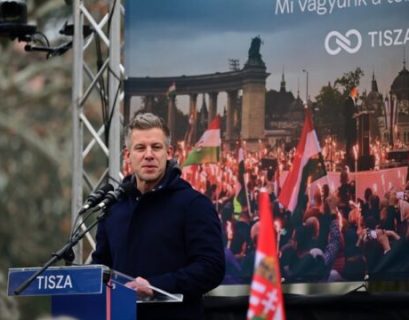
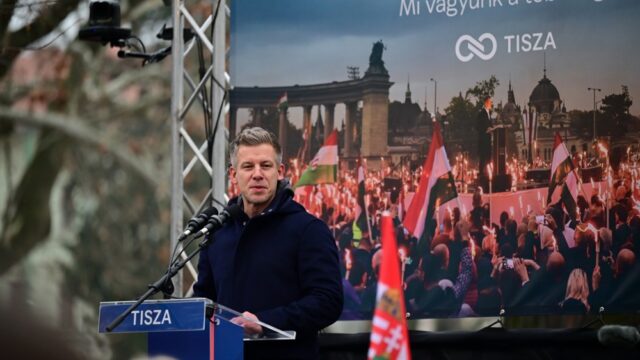
Hungarian President Tamas Sulyok announced this week that the date of the next Hungarian parliamentary election would be held on April 12, as widely expected. In a somewhat unusual move, the president did not convene a press conference nor issue a formal statement; instead, he posted it on Facebook. The announcement puts an end to persistent conspiratorial speculation that PM Viktor Orban might delay or even suspend the election by invoking a state of emergency, which has been in force for years due to the largely non-existent threat of mass migration. The official election campaign begins 50 days before polling day, so in mid-February. In practice, however, Hungary has been in permanent campaign mode since the June 2024 European elections, which marked the breakthrough of a new opposition movement led by former Fidesz insider Peter Magyar. His Tisza party, which brings together conservative critics of the government with liberal and left-wing voters, is currently polling 12 points ahead of Orban’s Fidesz, according to the latest survey by Median. Political analyst Gabor Torok commented on Facebook that “if these numbers are correct, it would be very difficult for Fidesz to turn the election around.” Despite this, government figures continue to project confidence. At last weekend’s Fidesz party congress, Orban replaced roughly half of the party’s constituency candidates, suggesting either a need for new faces or an attempt to shield prominent politicians from a potentially heavy defeat. Showing surprisingly little creativity in campaign messaging, Fidesz also announced yet another “national petition” on Ukraine, to rally voters in opposing an improbable-sounding “800-billion-euro EU package” to its neighbour, “which would be money taken from European and Hungarian families.” In reality, the EU is officially committed to provide Ukraine with loans worth 90 billion euros for the next two years (2026–2027).
Meanwhile, the independent news site 444.hu published a lengthy interview with historian Ferenc Laczo on Hungary’s foreign policy shift and Orban’s self-styled image as a decisive global player. Laczo, who teaches at Maastricht University, argues that Orban could have easily remained a local strongman on the periphery of Europe. Instead, he embarked on a high-risk foreign policy gamble after leaving the European Parliament’s largest grouping of conservative parties, the EPP, in 2021. His strategy is to export onto the international stage the same methods that he employs at home: polarise, then seize power. The problem, Laczo notes, is that the EU is a far more complex arena than Hungarian domestic politics, and Orban’s leverage is much weaker. Moreover, the EU is a consensus-based community. There is very little palpable benefit from this strategy, he said, but Orban no longer expects to be liked within today’s EU or to rehabilitate his reputation; instead, he seeks notoriety, believing that fear itself can be a political resource. “Orban has never accepted Hungary’s position inside the EU. It is a given that Hungary cannot compete with economic powers like Germany, but it tries to become a factor at least politically.” In the longer run, the main threats for Europe are the French election and US President Donald Trump, who really has the power to fracture European unity, he said.
New Czech government wins parliament’s backing; Turek appointed ‘Green Deal’ rep
It might’ve taken three days, but on Thursday the new Czech government led by PM Andrej Babis won parliament’s backing in a vote of confidence, which saw all 108 of the new coalition MPs in the 200-seat lower house of parliament vote in favour. The ruling coalition is made up of Babis’s ANO party, the far-right SPD movement and conservative Motorists. The main reason the vote took so long was that the Chamber of Deputies did not engage in all-night negotiating marathons like before; the speeches ended at nine in the evening, and MPs returned to the benches rested at nine in the morning. Throughout the 26 hours of debate, a record, leading up to the vote, ministers and cabinet members took to the floor to present their priorities, while opposition representatives criticised the new government for what they described as unrealistic promises and populist measures, as well as for forming a coalition meant only, they argued, to protect each other from extradition and prosecution. “This is a government of destruction that has come to destroy what was working and offers no alternative,” former PM Petr Fiala said during the debate, held just days before he bows out as ODS chairman after 12 years leading the centre-right party. After what had been described as constructive talks regarding the Czech-led ammunition initiative for Ukraine, which it had harshly criticised, the SPD party – chaired by house speaker Tomio Okamura – had already vowed to support the new government ahead of the vote.
Another week, another twist in the never-ending saga surrounding Filip Turek. The honorary president and figurehead of the Motorist party, a junior coalition partner in the new government led by Babis, has repeatedly failed to defuse the mounting scandals surrounding his possible nomination as environment minister, once more blocked by President Petr Pavel earlier this month. Working around that, the coalition cabinet approved on Monday Turek’s appointment as government plenipotentiary and commissioner for climate policy and the EU’s Green Deal, a “temporary solution”, according to Babis. Based on official documents, Turek will technically be an employee of the Environment Ministry, for now led by close ally and Motorist chairman Petr Macinka, with the notoriously anti-Green Deal and fossil fuel-enthusiastic pair now seemingly in charge of putting in practice the Czech Republic’s climate strategy and positions at the EU level. “The government is firing experts from ministries, but Macinka will find an office for the childish, sulking Turek,” MEP Danuse Nerudova mocked on X. “Let them prepare crayons, colouring books for him. More importantly, don’t let Mr Turek be involved in any adult business.” There’s already been doubts about the legality of his appointment, with constitutional lawyers pointing out that an MP mandate is incompatible with a civil service position. Meanwhile, Macinka, who is also deputy PM and foreign minister, backed Turek in his lawsuit against President Pavel, whom he accuses of constitutional overreach and argues should apologise to the MP for his reasoning against accepting his nomination to the government, and vowed to take further steps in the months-long face-off.
Poland repels massive cyberattack on energy; fate of Pole missing in Ukraine still unresolved
In late December, Poland experienced its largest cyberattack on energy infrastructure in years, Deputy Prime Minister Krzysztof Gawkowski revealed at a Tuesday press conference. The incident unfolded amid freezing winter temperatures, heightening fears of a nationwide power outage. Gawkowski, who also serves as minister of digital affairs, said the operation had “a clear objective: to cause a blackout.” Polish authorities believe the failed attack was an act of Russian sabotage aimed at destabilising the country. Urging calm, Gawkowski said state institutions had responded effectively and that there was no immediate threat to energy supplies. Energy Minister Milosz Motyka confirmed on Tuesday that the operation was unprecedented in both scale and coordination. One combined heat and power plant was targeted, along with numerous individual renewable energy installations across the country – marking the first time multiple facilities in different locations were attacked simultaneously. The assault focused on communication links between electricity producers and grid operators. Although the attempt was unsuccessful, officials warned it underscored the vulnerability of critical infrastructure to hybrid pressure. PM Donald Tusk said on Thursday that had the attack succeeded, up to 500,000 people could have been left without heating during the winter. In response, the government announced plans to step up investment in cyber protection for the energy sector in 2026, framing resilience not only as a technical challenge but as a matter of public safety.
Meanwhile, Polish officials are facing growing pressure to clarify the fate of Krzysztof Galos, a man from Krakow who travelled to Ukraine in spring 2023 and subsequently disappeared. Available information suggests he may have been detained by Russian authorities and died in a pre-trial detention facility in Taganrog, Russia, with reports indicating he was subjected to torture. In an exclusive interview published on Wednesday by Gazeta Wyborcza, Galos’s family said he had wanted to travel close to the front line to see the war for himself and possibly document it, having taken filmmaking equipment with him. He planned to be away for two weeks, and remained in brief contact after his departure, communicating only by text message and not answering phone calls, before all contact ceased within days. After Galos failed to return as planned, his son reported him missing. Police later presented the family with surveillance footage believed to show Galos’s car in Ukraine’s Zaporizhzhia region, near the area where he was last traced. After that, communication from investigators largely stalled. Over time, the family began receiving information – initially through informal channels and later through media reporting – suggesting that Galos may have been held in a Russian pre-trial detention facility in Taganrog. Russian authorities have not responded to inquiries from Polish diplomats. The family also describes the response from Polish institutions as uneven, with some offices acknowledging correspondence while others redirected requests or did not reply. Their account illustrates a wider pattern in the war in Ukraine: civilians detained outside any clear legal framework, with limited access to information or formal remedies. The family is seeking official confirmation of Galos’s fate and, if possible, the repatriation of his remains.