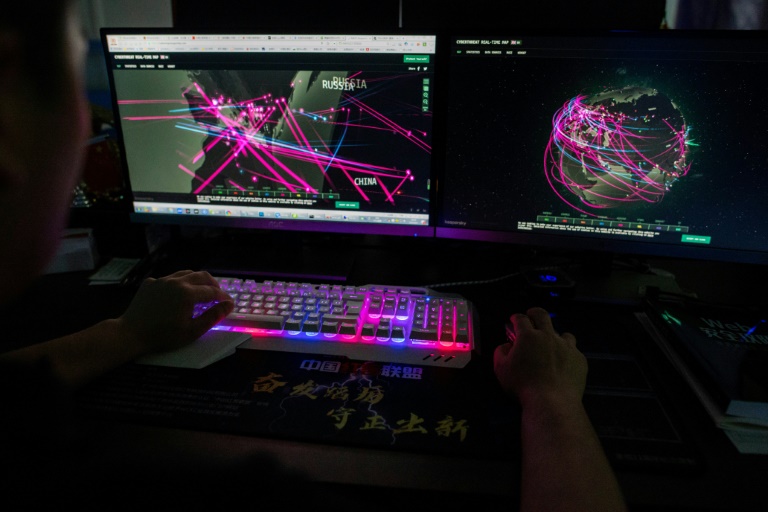
Artificial intelligence is transforming cybersecurity but not always in ways that favour defenders. As AI tools become more powerful and accessible, cybercriminals are gaining the ability to launch attacks faster, automate reconnaissance, create more convincing phishing campaigns, and identify vulnerabilities at unprecedented speed. For Canadian organizations, the challenge is no longer simply preventing cyberattacks; it is building resilience in an environment where attacks are becoming increasingly intelligent and adaptive.
The Canadian Centre for Cyber Security recently warned that frontier AI models are helping threat actors discover and exploit weaknesses much faster than before, compressing defenders’ response times from days or weeks to, in some cases, only hours. The agency also noted that AI is lowering barriers to entry, enabling less technically skilled actors to conduct sophisticated cyberattacks. Against this backdrop, many enterprises are reassessing how they approach cybersecurity. Traditional security architectures, which are often built from multiple disconnected products and vendors, can struggle to deliver the visibility and response speeds needed in today’s threat landscape.
Complexity has become the enemy
For many organizations, security infrastructure has evolved piecemeal over time. Different tools protect networks, endpoints, cloud environments, applications, and user identities. While each solution may be effective individually, fragmented deployments can create blind spots.
This problem is particularly acute in Canada, where businesses increasingly operate across distributed workforces, hybrid cloud environments, and geographically dispersed facilities. The expansion of remote and hybrid working models has effectively dissolved traditional network perimeters. Employees, contractors, suppliers, and technologies now connect from multiple locations and devices, creating an increasingly complex security environment.
In such environments, cyber resilience depends on an organization’s ability to see and protect its entire digital ecosystem rather than managing security as a collection of separate functions.
The rise of Zero Trust
One cybersecurity concept gaining increasing traction is Zero Trust Architecture (ZTA). The principle is straightforward: trust nothing by default. Every user, device, application, and connection must be continuously verified before access is granted. The Canadian Centre for Cyber Security describes the philosophy as “Never trust; always verify.”
Unlike traditional perimeter-focused security models, Zero Trust assumes that breaches can occur and therefore focuses on protecting resources wherever they reside. The approach includes capabilities such as multi-factor authentication, least-privilege access controls, network segmentation, continuous monitoring, encryption, and dynamic risk assessment
The Government of Canada itself has been pursuing Zero Trust principles as part of broader efforts to strengthen cyber resilience across public-sector systems. The Canadian Centre for Cyber Security has published extensive guidance to help organizations transition from perimeter-based security strategies toward Zero Trust models.
AI creates opportunities for defenders too
Modern security platforms increasingly use machine learning and AI to identify anomalous behaviour, correlate events across multiple systems, prioritize alerts, and detect threats in real time. These technologies can help reduce the burden on security teams that are already struggling to manage growing volumes of data and alerts.
The challenge facing many organizations is that cyber threats develop faster than human analysts can manually investigate them. AI-assisted monitoring can help bridge that gap by identifying unusual activity before attackers achieve their objectives. The Canadian Centre for Cyber Security has highlighted that frontier AI should be viewed not only as a risk but also as a tool that can strengthen cyber defences when appropriately deployed. However, AI-driven monitoring is only effective when supported by comprehensive visibility across users, endpoints, applications, cloud services, and networks.
Cybersecurity has traditionally emphasised prevention. Increasingly, however, organizations are recognizing that prevention alone is insufficient. Sophisticated attackers often evade perimeter controls, meaning that rapid detection and response become critical. This has led to growing interest in managed security services operating around the clock.
Continuous 24×7 monitoring can provide businesses with the ability to identify threats, investigate incidents, contain attacks, and initiate remediation measures regardless of when an incident occurs. This capability is particularly valuable for mid-sized organizations that lack the resources to operate their own security operations centres.
According to Canada’s National Cyber Threat Assessment, the sophistication and frequency of cyber incidents continue to increase, affecting both private-sector organizations and critical infrastructure. In practical terms, a ransomware attack that begins at 2 a.m. may need to be detected and contained within minutes, not when employees arrive for work the following morning.
Integration as a resilience strategy
One lesson emerging from the AI era is that cybersecurity effectiveness increasingly depends upon integration. Secure connectivity, identity management, endpoint protection, cloud security, threat intelligence, AI-powered analytics, and incident response all generate valuable security information. When these functions operate independently, organizations may struggle to correlate signals and understand emerging threats.
Integrated security models help enterprises establish a unified view of users, devices, applications, data, and network activity. Such an approach can simplify operations, reduce complexity, improve visibility, and accelerate response times. This matters because modern cyberattacks rarely target a single technology layer. Attackers frequently move between identities, devices, applications, cloud environments, and networks during a campaign. Defending against such threats requires a similarly connected security strategy.